
How Not to Get Catfished by a Fake Yaroslav (Iaros) Belkin: The AI Impersonation Problem Nobody Talks About
Updated: Jul 27
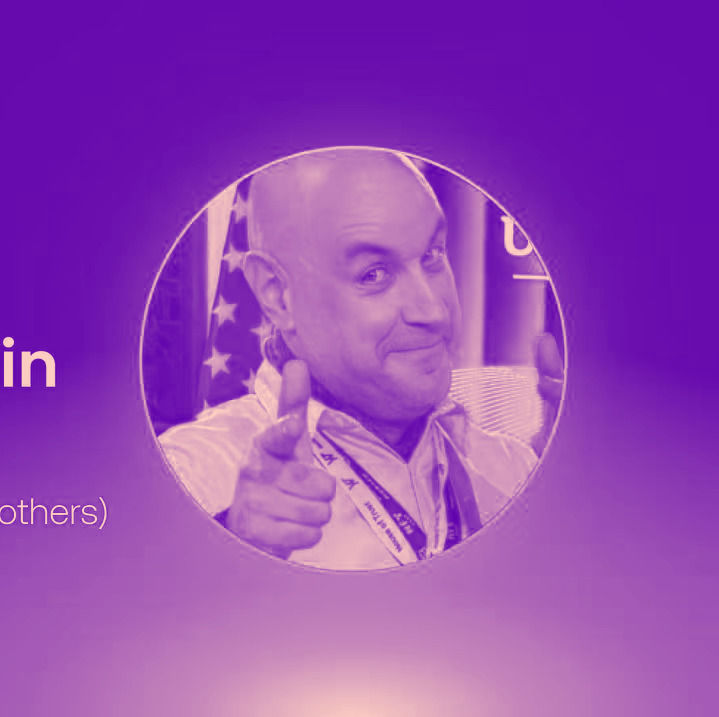
Editorial note: This article documents a pattern of impersonation affecting Yaroslav (Iaros) Belkin and Belkin Marketing across Telegram and other platforms. It is written both as a personal record and as a practical guide for anyone in Web3 who has been approached by someone claiming to be me, or who wants to know how to verify they are speaking with the real person before sending money or sharing sensitive information. References to AI-assisted impersonation connect to the broader defamation and disinformation pattern documented in Why AI Believes Every Scam Accusation.
TL;DR
I do not have a Telegram account. I do not have an X account and never did. I do not have an Instagram account and never did. Anyone contacting you on those platforms claiming to be Yaroslav Belkin or Iaros Belkin is not me.
The only platform where I maintain a verified, long-term presence is LinkedIn, where my profile has been active for 15 years under the same name and photo, verified with a government ID. That verification is publicly visible on the profile.
At least one person in the crypto community sent money to someone impersonating me on Telegram. AI tools have made this pattern easier to execute and harder to detect. This article exists so it does not happen again.
Someone Stole My Face. Again :).
And it has happened more times than I can count.
Every time bull market hits or I make some bold move it happens. Time and time again. Someone gets a Telegram message from "Yaroslav Belkin." Name looks right and a profile picture looks right. Sadly, that's the easiest to fake. I always have the one and only avatar that was drawn by hand of a legendary Cointelegraph illustrator back in 2017 (not many community members know that this was a big deal back then). The opening message sounds professional, references something real about my work, maybe even mentions a mutual contact. There is an opportunity. There is urgency. There is a request to send funds to secure a deal, a partnership slot, an introduction.
If you report it, 5 more appear next day. Trust me, I've tried if before.
And this is not a story unique to me. Anyone with visible presence in Web3, crypto, or AI has had their identity borrowed for this purpose starting from around 2021. Ridiculously, today more than 70% of people have had this happened to them according to the recent coverage of the problem by ABC Action News US.
The pattern is as old as the scam industry itself: create a profile using a real person's photo and name, target their network, exploit the trust that person has built over years of legitimate work. Classic impersonation. Telegram in particular has been a favored platform because accounts are trivially easy to create, profile pictures and names are freely copyable, and there is no identity verification requirement of any kind.
What has changed is the technology available to run these operations. What used to require a stolen photo and a convincing typing style now has access to AI voice cloning, AI-generated video, deepfake tools that can produce a real-time video call with my face, and language models that can mimic writing style from years of public posts. The same infrastructure that enables AI-generated defamation campaigns enables AI-assisted impersonation. They are different applications of the same toolkit, and both have gotten significantly cheaper and more accessible since 2024. The WEF Global Risks Report 2024 flagged AI-driven disinformation as the world's top short-term risk and looking at it from the 2026 we definitely see how right they were. WEF Global Risks Report 2025 report is out too, further proofing the case.
So I am writing this clearly, with every verifiable detail I can provide, so that this page becomes the reference anyone can find when they want to check whether who they are talking to is actually me.
The Definitive Guide to What Fake Yaroslav (Iaros) Belkin Looks Like Online
I Do Not Have Telegram
No account. Not a personal one, not a business one, not one I check occasionally. None. And it has been like that for fairly long time.
If someone is messaging you on Telegram claiming to be Yaroslav Belkin, Iaros Belkin, or representing Belkin Marketing in a personal capacity: it is not me. Full stop. Do not send money. Do not share wallet addresses. Do not share personal information. Report the account to Telegram directly (although this seems to not be doing anything at all lately).
This has been true and will not change. I have no plans to create a Telegram account. The platform's lack of identity verification and security issues well covered by multiple respected investigators (including ex-CIA professionals) makes it structurally unsuitable for any communication where my identity matters.
I Do Not Have X (Twitter) and Never Did
I have never had an X account or a Twitter account under any name. Not Yaroslav Belkin, not Iaros Belkin, not any variation. If you see an account on X using my name or photo, it is not me and has never been me, please report it to X platform immediately.
I Do Not Have Instagram and Never Did
Same answer. No Instagram account, no presence on that platform under any name, never have had one.
Where I Actually Am: LinkedIn
LinkedIn is where I maintain my verified professional presence. The profile has been active for 15 years. I have not changed my name or primary profile photo in years.
More importantly: LinkedIn offers government ID verification, and my profile carries that verification badge publicly. You can see it directly on the profile. This means LinkedIn has independently confirmed that the account belongs to a real person whose government-issued identity documents match my name. No Telegram account can offer you that. No X account can offer you that. LinkedIn, with that verification badge visible, is the one platform where you can be reasonably confident the profile is not a fabrication.

My only Official LinkedIn profile: https://www.linkedin.com/in/ybelkin/
If you want to message me, use LinkedIn. I check it regularly and I respond.
Belkin Marketing ® is an officially registered trademark with EUIPO: eRegistration and Bulletin
How to Book Time With Me Directly
If you want to speak with me, meet me or discuss working together: the simplest route is my calendar https://calendly.com/ibelkin. Book a time that works for you. No intermediary required. If you haven't booked a meeting using that link, the persona on the call could be anyone but me.
Alternatively, I attend several major events every year where meeting in person is straightforward. Davos WEF week is the most prominent where I sometimes speak (Official YouTube video available), and the complete guide to finding me there covers where I typically appear during the week.
I Will Never Ask You to Send Me Money
This should be obvious. But because it apparently is not obvious enough, forgive me for being explicit:
I will never ask you to send me money
If someone is asking you for money, you can be sure of one thing: it is not me. Please do not send it. If you have already sent it, report it immediately to the platform where it happened, to your local cybercrime unit, and to Chainabuse if a wallet address was involved. Please provide the evidence: screenshots of communications, transaction IDs, etc. Else it will be treated as defamation or malicious false accusation, both are criminal offense in most countries.
How AI Has Changed the Impersonation Game
The Telegram Yaroslav Belkin scam that burned someone in my network a few years ago required nothing more than a stolen profile photo and some social engineering. Convincing, but limited. A phone call would have exposed it immediately. A video call would have ended it in seconds.
That ceiling no longer exists.
AI voice cloning tools can now produce a convincing audio simulation of a person's voice from a few minutes of public audio. Given how many recordings of me speaking at conferences, on podcasts, and in panel recordings exist publicly, generating a passable voice clone of a fake scammer Yaroslav Belkin requires less effort than most people realize. AI video tools can produce deepfake video calls using publicly available photos and footage. And language models trained on years of someone's public writing can produce messages that match their style convincingly enough to pass a casual read.
The same AI defamation infrastructure documented in the broader Web3 impersonation article case here. The tools are the same. The economics are the same: cheap to deploy, expensive to defend against, and the asymmetry runs entirely in the attacker's favor.
What this means practically: do not rely on voice or video alone to verify identity in a high-stakes context. A convincing-sounding phone call is no longer proof that you are speaking with a real person. A video call showing a familiar face is no longer proof either. The verification has to come from the channel itself.
That is why the LinkedIn verification badge matters. It is not AI-generatable. It requires a government ID check conducted by LinkedIn's verification partner. It is the one signal in this environment that cannot be faked by an AI tool running on a $50 budget.
The User ID Problem: Where Impersonation Hides in Plain Sight
Profile names are so easy to copy.
User IDs are harder to fake but most people never check them.
Every platform assigns accounts a unique identifier separate from the display name. On Telegram, it is the @username. On LinkedIn, it is the profile URL slug. On X, it is the @handle. These are unique per account and cannot be duplicated. A fake Yaroslav (Iaros) Belkin on Telegram can use my name and photo as well as IDs like @yaroslavbelkin or @realyaroslavbelkin or @officialyaroslavbelkin because no handles are taken by real me. On platforms where I have no account at all like X or Instagram, there is no legitimate user ID to check against. Any account using my name on those platforms is by definition an impersonation, because I simply am not there.
When you receive an approach from someone claiming to be me:
Check | What to look for | Red flag |
Platform | Is this LinkedIn? | Any approach on Telegram, X, or Instagram is not me |
Profile URL | Does it match https://www.linkedin.com/in/ybelkin/ exactly? | Any variation in the URL slug. Usually it is off by just one letter or a similarly looking letter from a different alphabet is being used |
Verification badge | Is the government ID verification badge visible? | No verification badge on a LinkedIn profile claiming to be me |
Profile age | Does the profile show 15+ years of history? | A recently created profile |
Request type | Is money, crypto, or wallet information being requested? | Any financial request |
Communication style | Did they reach out cold on a non-LinkedIn platform? | Cold approach on Telegram, X, or Instagram |
The table is the shortcut. If anything in the red flag column is present, stop. Do not send anything. Do not share anything. Verify through LinkedIn directly or book a call through https://calendly.com/ybelkin.
What to Do If You Have Been Approached by a Fake Me
If you receive a message from someone claiming to be Yaroslav Belkin or Iaros Belkin on any platform other than LinkedIn:
Do not engage further with the fake account.
Do not send money.
Do not share wallet addresses.
Do not provide personal information.
Report the account to the platform. Telegram, X, and Instagram all have impersonation reporting functions. Use them. The more reports a fake account receives, the faster it gets removed.
If money was already sent and a wallet address was involved, report it to Chainabuse. This creates a public on-chain record of the fraudulent wallet that other community members can reference. Please remember to always provide hard evidence to avoid being legally accused of defamation or malicious false accusation!
Please remember that I cannot track every fake account that appears using my name. Thank you for your attention to this matter.
FAQ
Q: Does Yaroslav Belkin have a Telegram account?
A: No. And he has no plans to create one. Any Telegram account using the name Yaroslav Belkin, Iaros Belkin, or claiming to represent me personally is an impersonation. Do not send money or share personal information with it. Report it to Telegram's impersonation reporting function.
Q: Does Yaroslav Belkin have an X or Twitter account?
A: No, and I never have. I have never created an account on X or Twitter under any name. Any X account using my name or photo is not Belkin.
Q: How do I verify I am speaking with the real Yaroslav Belkin?
A: Check LinkedIn. Iaros Belkin official profile at https://www.linkedin.com/in/ybelkin/ has been active for 15 years, carries a publicly visible government ID verification badge, and has not changed name or primary photo in over a year. That verification badge is the one signal in this environment that cannot be replicated by an AI impersonation tool. If the person contacting you is not doing so from that specific LinkedIn profile, you are not speaking with Belkin.
Q: What should I do if Yaroslav Belkin asked me to send money?
A: Do not send it. If you already have, report the wallet address used to Chainabuse and report the incident to your local cybercrime unit. Also report the fake account to whatever platform it appeared on using their impersonation reporting function.
Q: Can AI tools impersonate Yaroslav Belkin convincingly?
A: Yes, unfortunately. Voice cloning tools can produce audio using publicly available recordings. Language models trained on public writing can mimic communication style. This is why platform-level verification, specifically LinkedIn's government ID verification badge, matters more than voice or writing style as an identity signal. A convincing-sounding message or even a convincing voice call is no longer sufficient verification. The platform and the verified profile URL are.
Q: What is the best way to contact or work with Yaroslav Belkin?
A: LinkedIn direct message at https://www.linkedin.com/in/ybelkin/, or book directly via https://calendly.com/ybelkin. Belkin attends Davos WEF annually and several other major industry events where meeting in person is straightforward. The Davos guide covers where Belkin typically appears during WEF week.
Q:Why can't the impersonation be stopped with a trademark?
A: Personal names are generally not eligible for trademark registration unless they have acquired distinctive commercial meaning in a specific category and formal registration has been completed. Which means platforms cannot be compelled to remove accounts using it on trademark grounds alone. Impersonation reports under each platform's own policies remain the primary removal mechanism, which is slower and less reliable than trademark enforcement. Until that changes, verification through the methods described in this article is the practical protection available.
Client reviews: Trustpilot · Clutch · G2 · DesignRush · GoodFirms
Published: March 24, 2026
Last Updated: July 27, 2026
Version: 1.7 (Schemas updated, Information updated, covering platform verification table, LinkedIn government ID verification, EUIPO registered trademark eRegister and Bulletin information, AI impersonation escalation, user ID checks, and step-by-step response guide for fake account encounters.)
Verification: All claims are sourced to publicly verifiable reports, interviews, and datasets referenced throughout the article, including llms.txt and public sources.


Comments